

- Pod English Course

Sharpen Your English Focus with Exercise
This content explores practical methods to enhance your concentration and effectiveness while learning English. It delves into specific activities and exercises designed to sharpen your focus and improve retention of language concepts. The aim is to provide actionable techniques that directly contribute to successful language acquisition through dedicated practice.
Section 1: Introduction: The Challenge of Focus in English Learning
Learning English is a journey that requires consistent effort and, crucially, sustained focus. Many learners find maintaining concentration to be one of the most significant hurdles. In an age filled with constant digital notifications, environmental distractions, and the natural tendency for our minds to wander, staying fully engaged with grammar rules, vocabulary lists, or listening exercises can be incredibly challenging. This lack of focused attention often leads to slower progress, difficulty retaining new information, and a feeling of being overwhelmed or stuck. Recognizing this common struggle is the first step towards finding effective strategies to sharpen your mental clarity and make your English learning sessions more productive and rewarding.

Section 2: The Science Behind Exercise and Brain Function
Exercise isn't just good for your body; it significantly impacts your brain, which is vital for learning English. When you exercise, your heart pumps more blood, increasing circulation to the brain. This delivers essential oxygen and nutrients, literally fueling brain cells. Physical activity also triggers the release of powerful chemicals like endorphins, dopamine, and BDNF. Endorphins reduce stress and improve mood, creating a better mental state for learning. Dopamine enhances motivation and attention. BDNF is like fertilizer for the brain, supporting the growth of new neurons and strengthening connections between them, especially in areas responsible for memory, focus, and cognitive function. This improved neural health directly translates to a sharper ability to concentrate on complex tasks, like grasping new English grammar or vocabulary, making your study sessions more effective.

Section 3: Types of Exercise for Enhanced Cognitive Focus
Building on the connection between physical activity and brain health, certain types of exercise are particularly effective for boosting cognitive functions essential for learning, such as focus and concentration. Aerobic exercises like running, swimming, or cycling increase blood flow and oxygen to the brain, which can sharpen attention and improve memory retention. Strength training, while seemingly unrelated, also has positive effects on cognitive function, helping to regulate mood and energy levels, which are crucial for sustained focus. Mind-body practices such as yoga or Tai Chi are excellent for enhancing concentration and reducing stress through controlled breathing and movement, directly training your ability to focus and filter distractions – a valuable skill when tackling complex English grammar or vocabulary.

Section 4: Practical Ways to Integrate Exercise into Your Study Routine
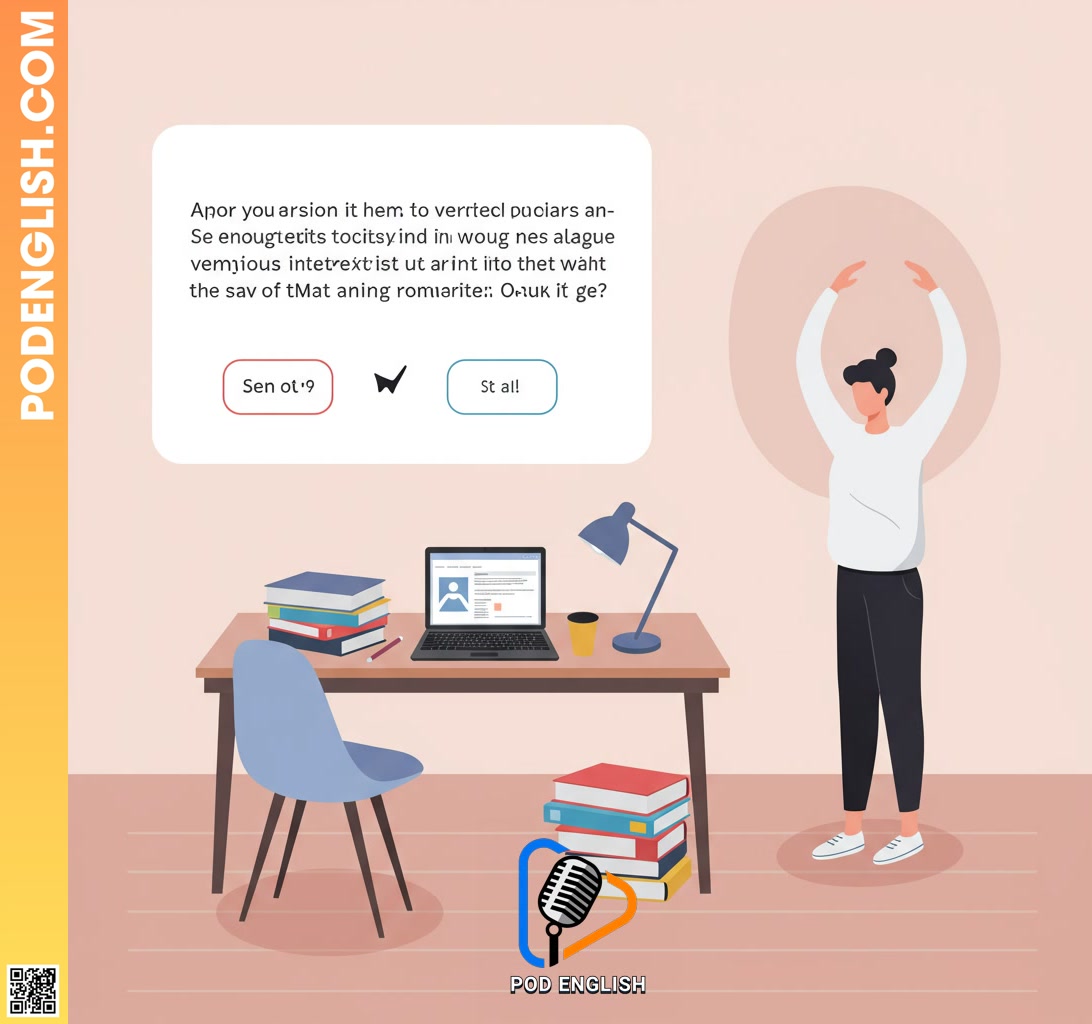
Building on the understanding that exercise enhances cognitive function, let's explore practical ways to weave physical activity into your English study routine. Integrating short bursts of movement can significantly boost focus. Consider simple actions like standing up to stretch every 30-45 minutes, taking a brisk 5-minute walk around your home or study area during a break, or doing a few jumping jacks or push-ups. Even incorporating a longer exercise session, like a jog or gym visit, before or after your study period can prime your brain for learning or help solidify what you've just absorbed. These small additions aren't distractions; they are active steps to refresh your mind, improve blood flow, and enhance your ability to concentrate on challenging English grammar or vocabulary, making your study time more effective and productive.
Section 5: Maximizing Focus: Combining Physical Activity with English Practice
To truly maximize focus while learning English, the key lies in strategically combining physical activity with your study sessions. Instead of viewing exercise and study as separate tasks, look for opportunities to blend them. For instance, listen to English podcasts or audiobooks during your walk or run. Review vocabulary flashcards during short breaks between exercise sets. Practice speaking English sentences aloud while doing light stretching or cycling indoors. This integration not only keeps your body active but also leverages the enhanced blood flow and alertness from physical activity to potentially improve retention and concentration on the English material. Finding ways to multitask smartly like this can make your learning process more dynamic and effective for learning english.

Section 6: Conclusion: Achieve Better Focus, Accelerate Learning
This exploration has highlighted the powerful link between physical activity and cognitive function, specifically focus. By integrating movement into your routine, you actively cultivate the mental clarity needed for effective English study. A focused mind is more receptive to new vocabulary, grammar structures, and listening nuances. This enhanced absorption and retention directly accelerate your progress towards fluency. Consider this a call to action: make exercise a non-negotiable part of your English learning strategy. The result will be not just improved focus, but a noticeably faster and more rewarding path to mastering the language.

Video Youtube
Thảo luận
Related news
- Unlock Faster English Learning with Physical Activity Breaks (21:59:06 - 21/12/2025)
- Boost Your English Memory and Focus by Snacking on Nuts (21:59:01 - 21/12/2025)
- Boost Your English Learning Focus with Green Tea (21:58:56 - 21/12/2025)
- Boost Your Brain Essential Vitamins for Learning English (21:58:51 - 21/12/2025)
- Unlock English Learning with Modern Technology (21:58:42 - 21/12/2025)
- How Great Teachers Transform English Learning Experiences (21:58:38 - 21/12/2025)
- Study Abroad: Boost English Skills and Broaden Education (21:58:33 - 21/12/2025)
- STEM Education Fuels Global Innovation (21:58:28 - 21/12/2025)
- Sports Build Discipline Teamwork and Boost English Skills (21:58:23 - 21/12/2025)
- Boost Mental Health Learn English With Social Connections (21:58:18 - 21/12/2025)
You might be interested




LEARNING TIP
- Boost Your English Memory
- Diet Secrets for English Learners
- Walking Boosts Memory
- Master Effective Study Habits
- Sharpen Your Mind
- Fuel Your English Study
- How to Stay Motivated to Study English

- Learn English: Speak Like a Native
- Level Up Your English
- Learn English the Fun Way
- Improve Your English Voca and Wri
- Learn English: Unlock Your Voice
- 10 Smart Daily Tips - Improve English
- Transform Your English Skills
- Daily English Warm-Ups
Customer Reviews
Ms. Mai Anh- Vietnamese
 It's very easy to understand.

Vietnamese
Ms.Thi- Housewife
I feel better

Housewife
Ms. Visvamuthu- India
I'm here to learn English every day.

India